

Curry rice asks you to choose where to put your spoon. Curry udon doesn’t.
The sauce and the noodles arrive together, already tangled. You lift a strand and the curry comes with it. There’s nothing to arrange and nothing to balance on the side of the plate.
I think that’s why curry udon feels so quietly comforting. It takes the familiar flavour of Japanese curry and loosens it just enough to become a bowl you can hold close, a delicious pot dish that warms you from the inside out.
This guide is part explanation, part recipe review. It covers what kare udon is, how the curry soup comes together, and the small decisions that shape a good bowl. I’ve kept it practical, because this dish deserves to be made on an ordinary weeknight, not saved for a special one.
What Is Curry Udon (Kare Udon)?
Curry udon, or kare udon, is thick, chewy udon noodles served in a Japanese-style curry soup.
What makes it different from curry rice is the texture of the sauce. It sits somewhere between a sauce and a broth. It’s thinner than the curry you’d spoon over rice, but thick enough to cling to every noodle.
Japanese curry itself is mild, slightly sweet and full of umami. I’ve found that’s what makes it such an easy entry point for children or anyone who shies away from heat. If you’d like more of a kick, a little cayenne or crushed chili flakes added with the curry powder will do it.
Curry Roux: Homemade vs Store Bought
Every Japanese curry udon starts with a choice: make the roux yourself, or reach for the box.
Making Curry Roux From Scratch
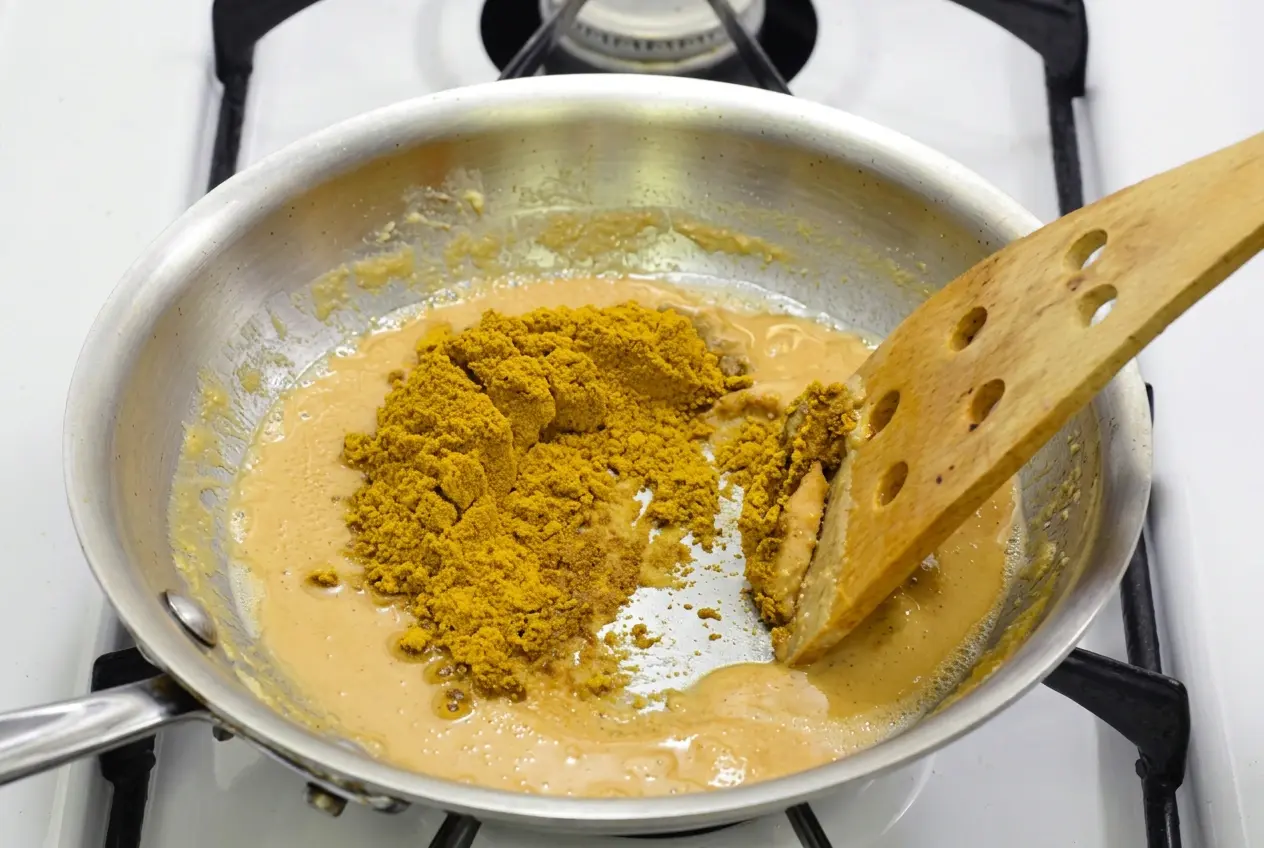
A homemade curry roux needs only three ingredients: butter, flour and curry powder.
It takes about 10 to 15 minutes prep time at the start of cooking. Melt the butter over medium low heat, whisk in the flour, and keep stirring until the mixture turns golden brown. Not dark brown. Then add the curry powder and cook for another 30 to 60 seconds before taking it off the heat.
I think the real appeal here is control. You decide what goes in, and you can skip the additives often found in commercial roux.
Pro tip: Make a larger batch and freeze it in portions. A four-times batch uses 168g butter, 168g flour and 48g curry powder. On a busy evening, you’ll be glad it’s already waiting.
Using Store Bought Curry Roux
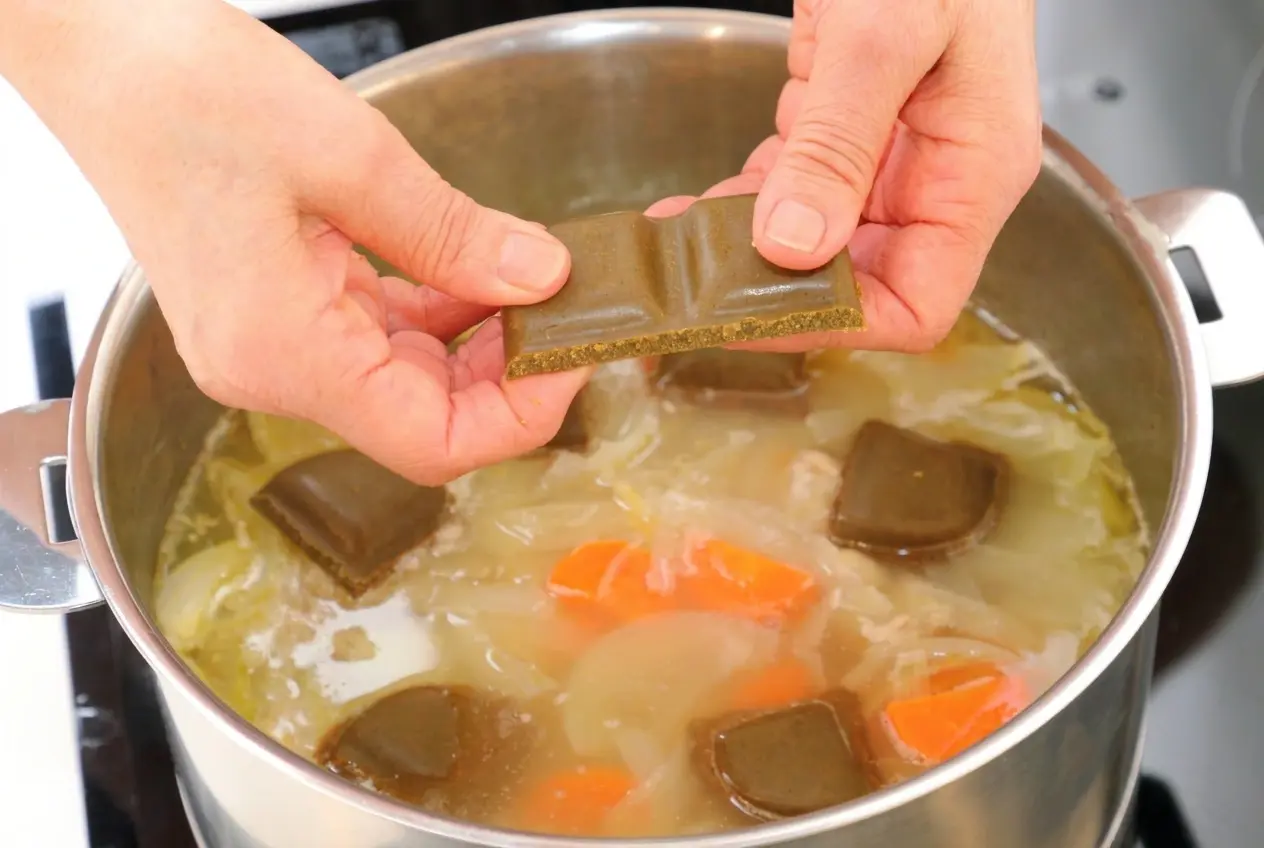
Store bought curry roux blocks are a staple in many homes for good reason. They’re convenient and they taste good.
They do usually contain additives such as caramel colour and flavour enhancers. That doesn’t make them unsafe. It’s simply worth knowing so you can choose what suits your kitchen.
If you’re using store bought blocks, skip the roux-making step entirely. Break the block into pieces, turn the heat off, add them to the pot and stir until fully melted before bringing it back to a low simmer.
The amount of packaged roux needed depends on the brand and the quantity of broth. Follow a tested curry udon recipe for your chosen product, adding the roux gradually and adjusting the liquid until the soup reaches your preferred consistency
Choosing Your Curry Powder

If you’re making roux from scratch, the curry powder carries most of the flavour.
A Japanese-style curry powder blend typically includes turmeric, coriander, fenugreek, cumin, chili pepper and ginger. Some blends also add mandarin orange peel, which gives a faint brightness you might not expect.
If you can’t find a Japanese blend, your favourite mild curry powder works as a substitute. I’d suggest staying on the gentle side. Kare udon isn’t meant to shout.
Key Ingredients for Japanese Curry Udon
Udon Noodles
Udon comes in a few forms: homemade, frozen, fresh vacuum-packed and dried.
Frozen udon is the easiest place to start. It’s widely available, convenient and holds a lovely chewy texture once cooked. To cook udon properly, boil it separately in plenty of water for the best texture.
Dashi Stock and Instant Dashi
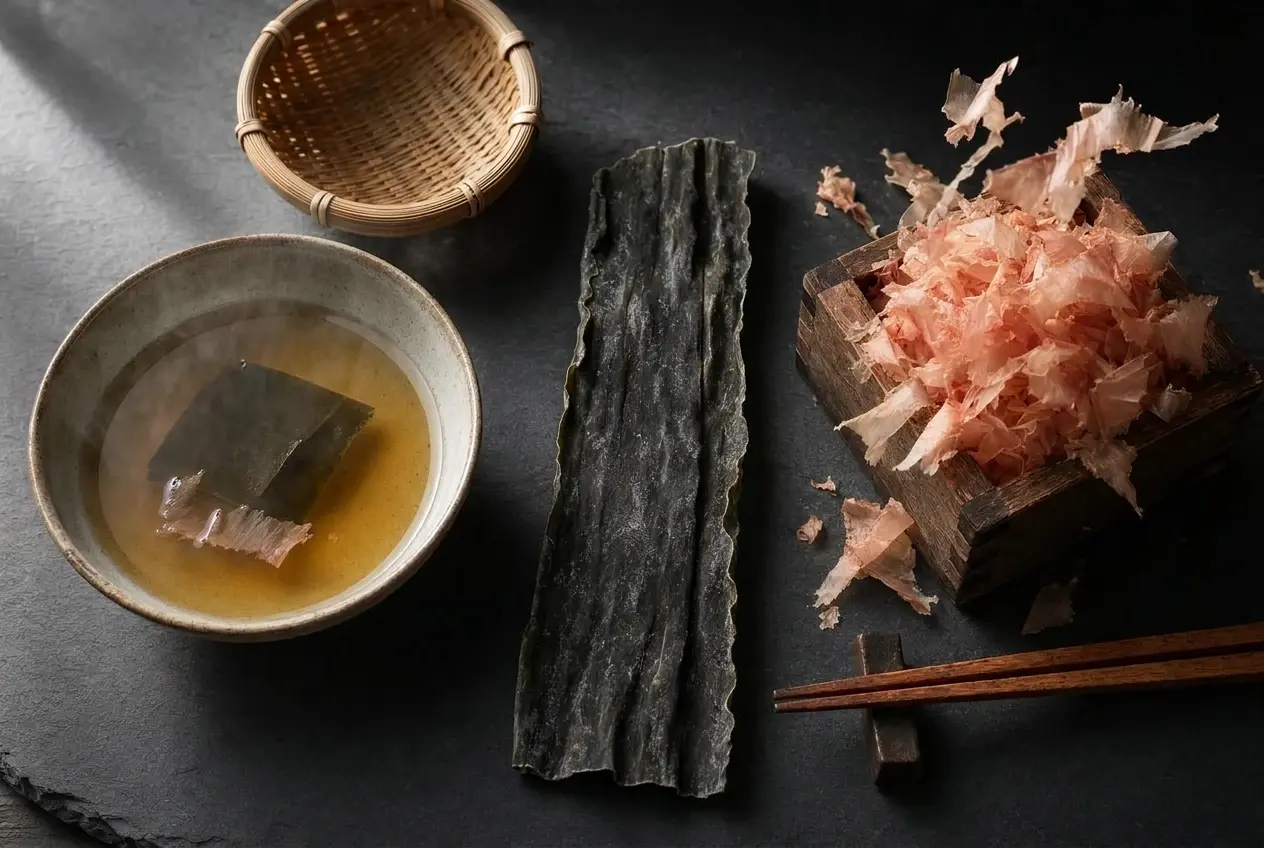
Dashi is a foundational Japanese broth made from kombu (seaweed) and bonito flakes (katsuobushi). It gives curry soup that quiet, savoury depth that feels distinctly Japan.
If you’re using chicken broth instead, a packet of instant dashi is a useful shortcut. It isn’t essential, but it adds umami. There are traditional versions made with skipjack, vegetarian versions made from kelp alone, and less common ones made from scallop or mushroom.
Some instant dashi contains the same additives as store bought roux. Read the label and decide what works for you.
Soy Sauce and Mirin
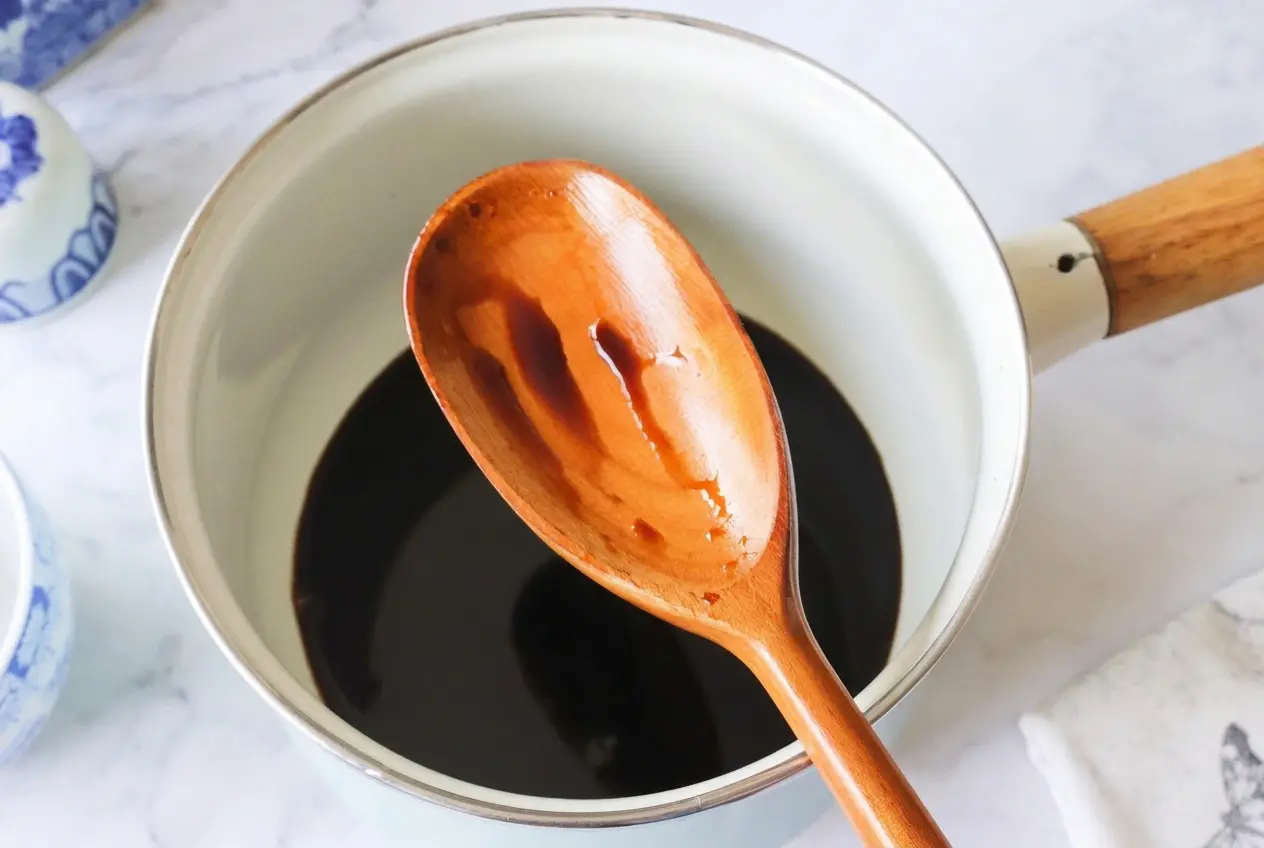
A tablespoon each of soy sauce and mirin rounds out the sauce.
Mirin is a rice wine with more sugar and less alcohol than sake. The real version is made from sweet rice and rice koji. Imitation versions, often labelled aji-mirin, contain added sugar or syrups. If you can’t find mirin, mix approximately three parts sake with one part sugar. The flavour won’t be identical, but it makes a useful substitute in Japanese cooking.
Meat: Beef, Pork or Chicken
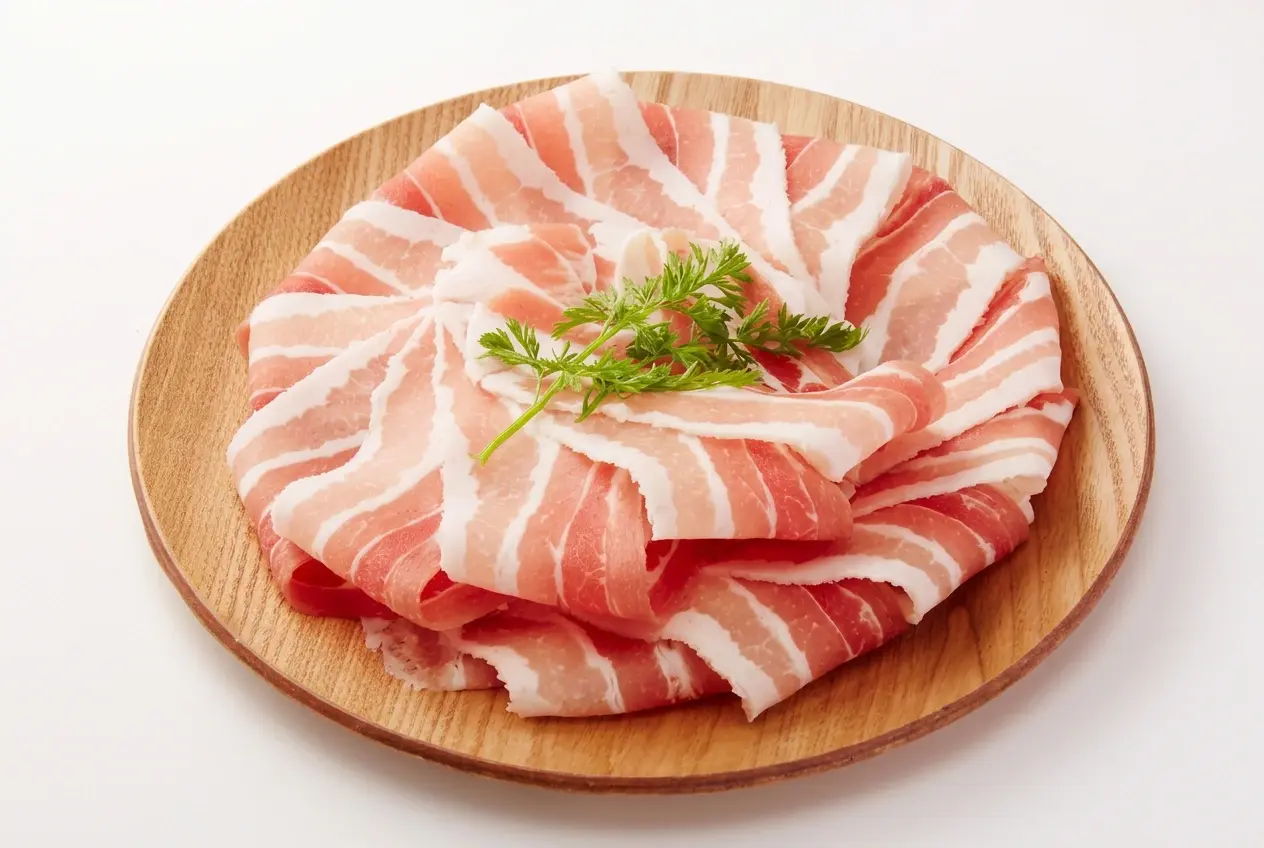
Very thin slices of meat work best, the kind used for shabu-shabu. Beef is common, but thinly sliced pork belly or chicken works the same way.
This style of meat is often sold frozen at Chinese, Korean or Japanese supermarkets. If you’d rather slice it yourself, partially freeze the meat first. It firms up and becomes much easier to cut thin. Minced meat is another option.
Mushrooms and Fish Cakes
Shiitake mushroom, king oyster, shimeji and oyster mushrooms all suit this dish. They can join the meat or replace it entirely.
Fish cakes such as kamaboko add a traditional topping that brings texture and flavour.
Two Quiet Additions
Honey softens the slightly bitter edges of the spices. A small square of dark chocolate (around 70% cacao) deepens the colour and richness without tasting like chocolate. Both are optional. I think both are worth trying at least once.
Curry Udon Recipe: Step by Step
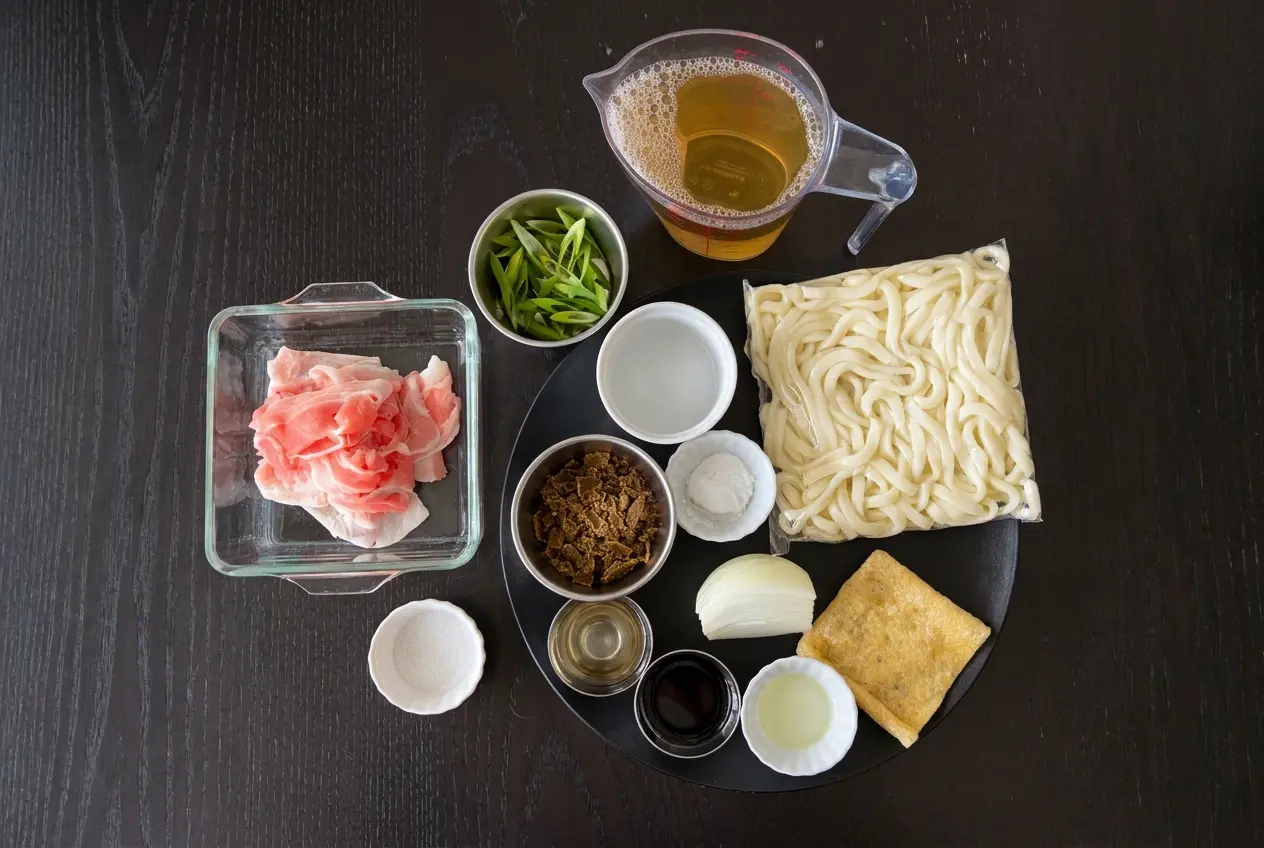
This makes four servings.
Ingredients
3 tbsp (42g) unsalted butter
5 tbsp (42g) all-purpose flour
2 tbsp (12g) Japanese curry powder
4 servings udon noodles
450g very thinly sliced beef, pork or chicken
2 large carrots, cut into small pieces
2 medium onions, sliced lengthwise
1.2L low-sodium broth, plus up to 1 cup extra
1 packet (8g) instant dashi, optional
1 tbsp soy sauce
1 tbsp mirin
2 tbsp honey, to taste
15g dark chocolate, optional
Salt and neutral oil
Chopped spring onion, to garnish
1. Make the Curry Roux
Melt the butter over medium low heat. Whisk in the flour and cook for about 10 minutes prep time, whisking often, until golden brown. Add the curry powder and cook for another 30 to 60 seconds. Transfer to a small bowl.
2. Boil Water to Cook Udon
Bring a large pot of water to a boil. You’ll need it later.
3. Cook the Meat, Then the Vegetables
Heat a pot over medium high heat. Add a little oil and the sliced meat with a pinch of salt. For beef or pork, cook the thinly sliced meat until appropriately done, then remove it to prevent overcooking. If using chicken, cook it thoroughly until the thickest pieces reach an internal temperature of 74°C (165°F) before removing it. Return the fully cooked meat to the curry soup at the end and heat through before serving.
Pour out any excess oil. Lower the heat to medium and cook the carrots and onions with a sprinkle of salt until the onions soften.
4. Build the Curry Soup
Add the broth, instant dashi (if using), soy sauce and mirin. Bring to a low simmer, cover, and cook until the carrots are tender. Skim off any scum.
Add the chocolate and curry roux. If the roux has hardened, loosen it with a ladle of hot broth first. Stir until there are no lumps left. Press any stubborn bits against the side of the pot with a spatula.
5. Adjust and Taste
Add honey to taste. Simmer gently, uncovered, for about three minutes until slightly thickened.
Want it soupier? Add more broth or hot water. Want it thicker? Let it simmer a little longer. Taste once more, then turn the heat very low and return the meat just to warm through.
6. Cook Udon and Serve
A few minutes before the sauce is ready, cook udon according to the package directions. Frozen udon usually needs just a minute or so.
Drain, divide among serving bowls, ladle the curry soup over the top and finish with toppings like chopped spring onion or fish cakes. Serve immediately, while the noodles still have their bounce.
Pro tip: Cook the meat first and take it out. Returning it at the very end keeps it tender instead of tough.
A Vegetarian Version, Plus Dairy-Free and Gluten-Free Options
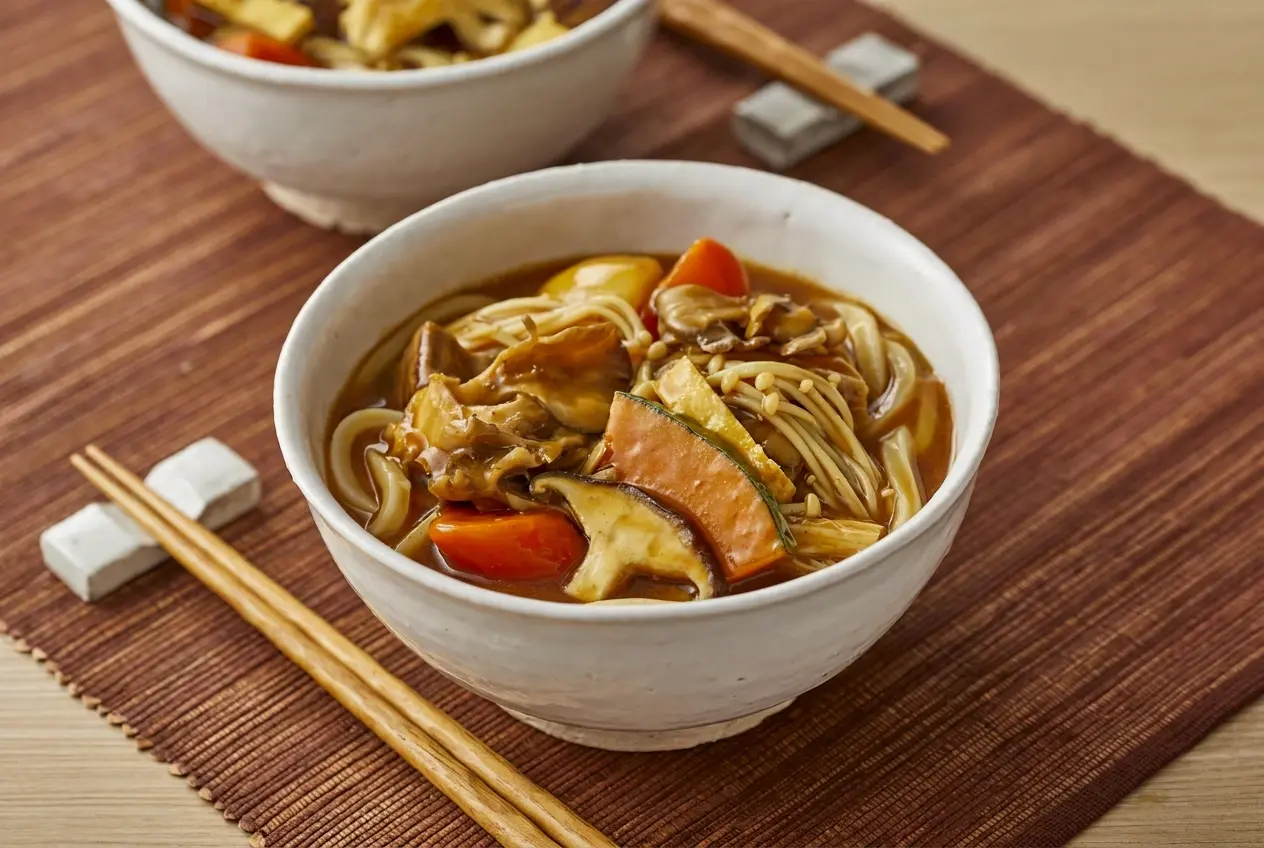
Vegetarian Curry Udon
Replace the meat with mushrooms. Sear them in batches over high heat with a little oil until the edges brown, then set aside. Add them back at the end, just as you would the meat. Pair with a kelp-only instant dashi or vegetable broth.
Dairy-Free and Gluten-Free Curry Sauce
Skip the roux. Instead, add 2 tablespoons of curry powder straight to the softened carrots and onions and toast for about 30 seconds, stirring constantly so it doesn’t scorch.
Season with honey and chocolate, then whisk in the corn starch slurry just before returning the meat or mushrooms. The sauce thickens as it simmers.
This method removes butter and wheat flour from the roux. For a fully dairy-free and gluten-free bowl, use certified gluten-free noodles, gluten-free tamari or soy sauce, and check the labels on your curry powder, broth, dashi and chocolate for other allergens or gluten-containing ingredients.
What to Do With Leftover Japanese Curry
Curry rice and curry udon share the same base. The real difference is liquid.
A curry made for rice uses roughly half the liquid of one made for udon. So if you have leftover Japanese curry in the fridge, you’re already most of the way to a bowl of kare udon. Warm it gently and loosen it with dashi or broth until it reaches that in-between texture: thinner than a sauce, thicker than a soup.
Pro tip: Add liquid a little at a time. It’s much easier to thin a curry than to rescue one that’s gone watery.
Common Mistakes to Avoid
Rushing the roux. High heat burns butter quickly. Keep it at medium low and stop at golden brown.
Overcooking the meat. Thin slices cook in moments. Pull them out early and add them back at the end.
Adding roux to a boiling pot. Turn the heat off first, especially with store bought blocks. It helps the roux melt smoothly.
Forgetting to taste. Curry powders vary. Some lean bitter and need a touch more honey. Broths vary in salt, so season at the end.
Letting noodles sit. Udon keeps soaking up sauce. Cook it last and serve immediately.
One More Spoonful of Curry Knowledge
Is curry udon spicy?
Not usually. Japanese curry is mild and slightly sweet. You can add cayenne or chili flakes if you want more heat.
Can I use store bought curry roux?
Yes. Skip the roux-making step and melt the blocks into the broth with the heat off.
Which udon noodles work best?
Frozen udon is convenient and has a good chewy texture. Fresh vacuum-packed and dried udon work too.
Other Recipes, Same Quiet Comfort
Once you’ve made curry udon, you’ll notice how easily it bends. The same curry soup becomes curry rice with less liquid. The same roux, frozen in portions, becomes tomorrow’s dinner.
I think that’s what I’ve come to appreciate most. Kare udon isn’t a complicated dish. It’s a patient one.
Start with frozen udon and whichever roux feels right for you. Keep the heat low when it matters. Taste before you serve.
Then sit with the bowl for a while. Let the noodles carry the curry. That’s really all it asks of you.
If you’re craving something heartier, discover why slow-cooked Japanese beef curry is worth the extra patience, with tender beef, rich curry sauce, and comforting flavours in every spoonful.