Katsu is easy to eat quickly.
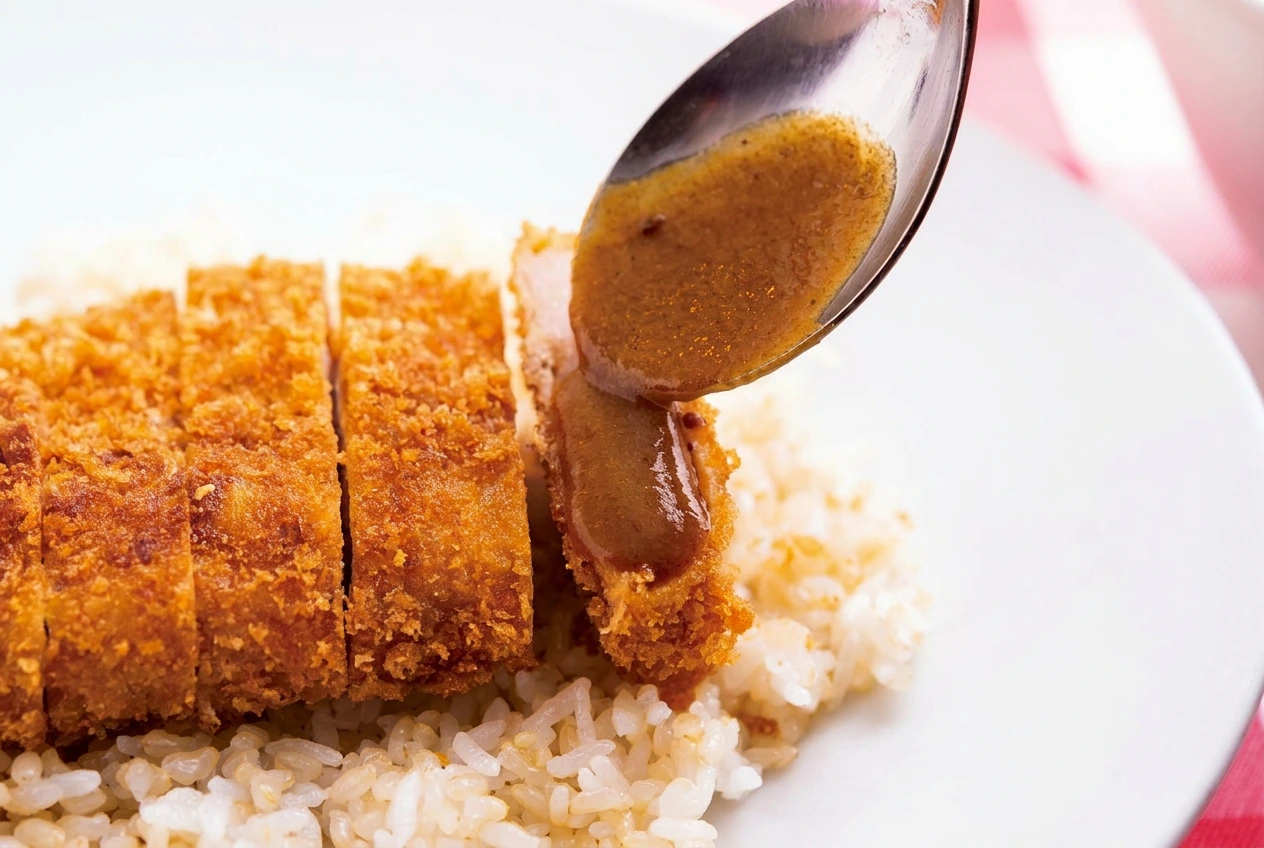
It usually arrives already sliced, each strip ready for chopsticks or a spoon. Nothing needs to be cut or assembled. It’s tempting to treat it like fuel: a few bites between other things, then on with the day.
I understand that. Many of my meals have to fit into small gaps. But katsu is one dish I’ve come to think deserves a little more patience.
Part of it is time. A breaded, fried cutlet doesn’t stay the same for long. The crust is at its crispest when it leaves the fryer. After that, it begins to change. Steam softens it from beneath. Sauce or curry softens it from above. Within one meal, the same piece can move from crisp to tender to something in between.
If you eat quickly, I think you miss most of that change. You get one version of the dish, not the whole arc.
Then there’s the work behind it. Katsu asks for several careful steps: preparing the meat, coating it, frying it, often letting it rest before slicing. None of that is dramatic. It’s quiet, repeated effort, the kind that only shows when it’s done well. When the crust holds and the meat stays tender, I don’t think that’s luck.
Slowing down feels like a small way of noticing that care.
I also find katsu rewards balance more than speed. The crust and the meat need each other. So do the cutlet and whatever sits beside it, whether that’s rice, cabbage or curry. A rushed mouthful tends to blur those parts together. A slower one lets you taste where each begins and ends.
That doesn’t mean every plate needs ceremony. Some days, a quick meal is simply what the day allows, and there’s no shame in that.
But when a good katsu is in front of me, I try to give it a few more minutes than I’d planned. Not to study it. Just to let it be what it is, for as long as it stays that way.
Perhaps that’s the real question katsu leaves on the table: how much of what we eat do we actually notice?