Some evenings, the day ends before you do.
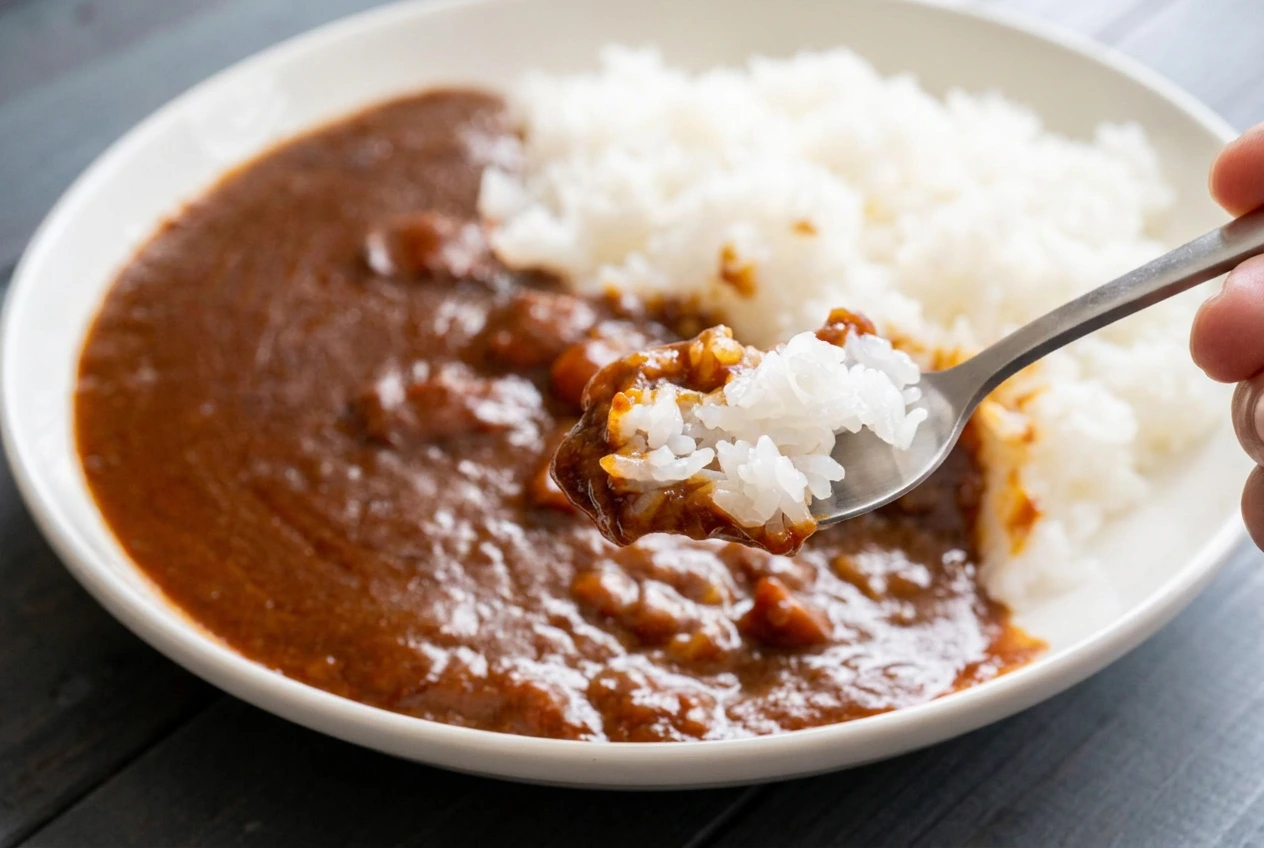
The meetings are over and the messages have stopped, but you’re still carrying some of the noise home. On evenings like that, I’ve come to think a plain plate of curry rice is enough.
Japanese food was ordinary for me growing up. It belonged to mall dinners, family meals, and the loose hours after school. Curry rice wasn’t special. It was simply there, part of the routine, the way a familiar route home is.
Only later did I start paying closer attention. I noticed how one chain leaned sweeter while another let the spice build slowly. I saw how the texture of a sauce, or the choice of a topping, could change the shape of a whole plate. Eventually I became curious about where the dish came from and how it found its way into everyday life.
You might expect all that attention to make me want more from a meal. Mostly, it’s done the opposite.
Lunch often has to fit between other things. A late dinner has nothing left to fit around. That’s when, for me, simplicity makes the most sense. Rice on one side, sauce on the other, a spoon. The choices are small: how much spice, whether to add anything on top. After that, there’s nothing left to decide.
Simple isn’t the same as empty, though. When nothing on the plate competes for attention, I find I notice the curry itself. Is it sweeter than I expected? Does the spice arrive early or late? Those questions feel easier to sit with once the day has gone quiet.
I won’t pretend a plate of curry rice fixes a long day. It doesn’t make the hours lighter. It just doesn’t add to them, and some nights, that’s the kindest thing a meal can do.
There’s a habit, I think, of saving our attention for meals that feel like occasions. But the ordinary ones are the ones we return to most often. They’re the meals that shape what comfort tastes like over years, not evenings.
So when the city finally slows down, it might be worth letting your dinner slow down with it.
Not every meal needs to be an event. Some only need to be enough.