The first time I tried to make Japanese curry at home, it was a wet Sunday in my parents’ flat. The rain was coming in sideways past the kitchen window, and I had a box of store Japanese curry roux cubes from the NTUC FairPrice near the MRT station.
I thought it would be easy. The box had pictures.
Forty minutes later, I had a pot of thin brown water with lumps floating in it like small islands. My mother looked over my shoulder, said nothing, and handed me a ladle. We ate it anyway, spooned over rice, with the rain still going.
I’ve cooked a lot of pots since then. Some were good. Some taught me things. This guide is what I wish I’d known that afternoon, written for anyone in Singapore who loves the plate they get at the mall and wants to make it in their own kitchen.
What Makes Japanese Curry Sauce Different
Growing up here, “curry” meant something specific. Fish head curry at a coffee shop. Chicken curry with potatoes at reunion dinners. The kind built from rempah, loosened with coconut milk, with real heat that makes you reach for your iced Milo.
Japanese curry is a different idea entirely.
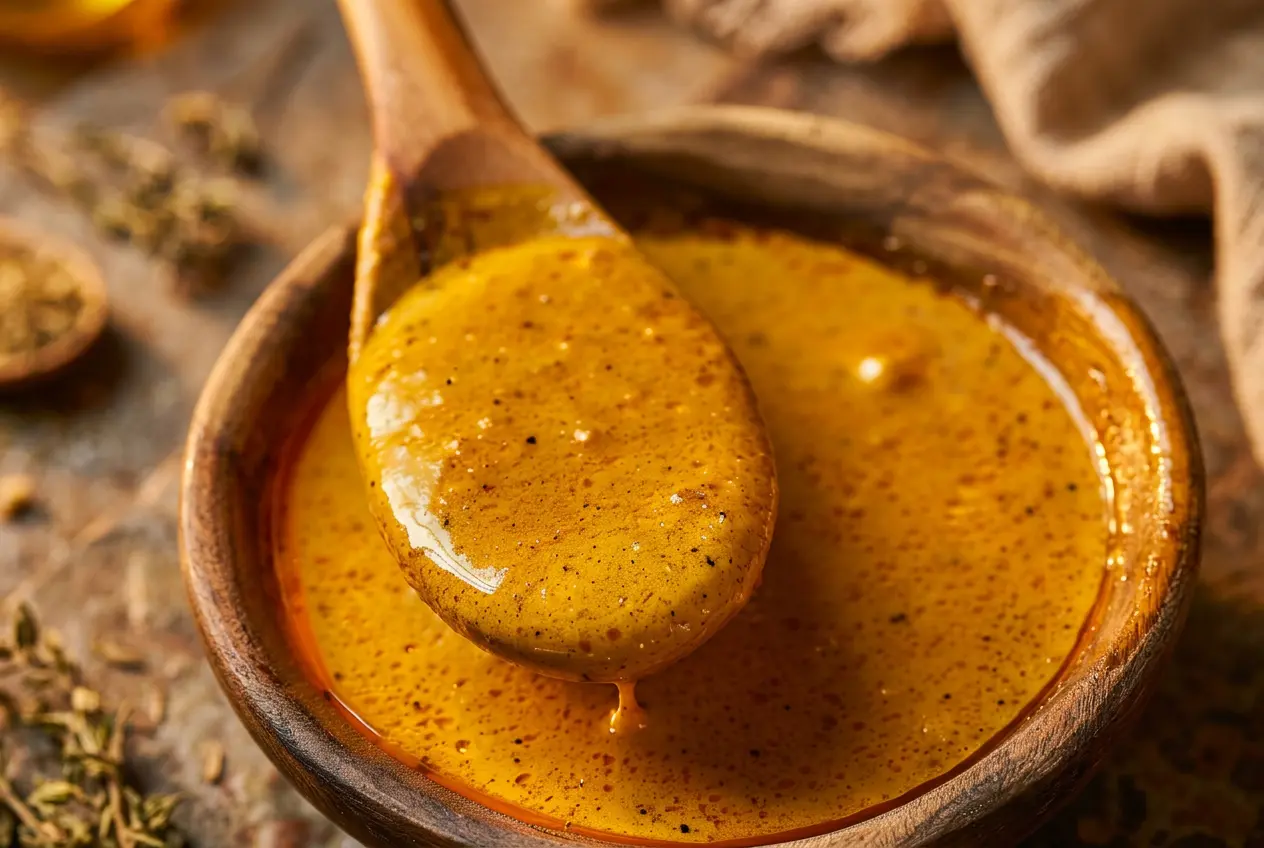
Compared with Indian curry or Thai curries, it’s milder, slightly sweet, and much thicker. The rich savory curry sauce is closer to a gravy than a soup. The curry sauce coats your spoon and sits on the rice instead of soaking straight through. There’s no coconut milk, and no layer of chili oil on top.
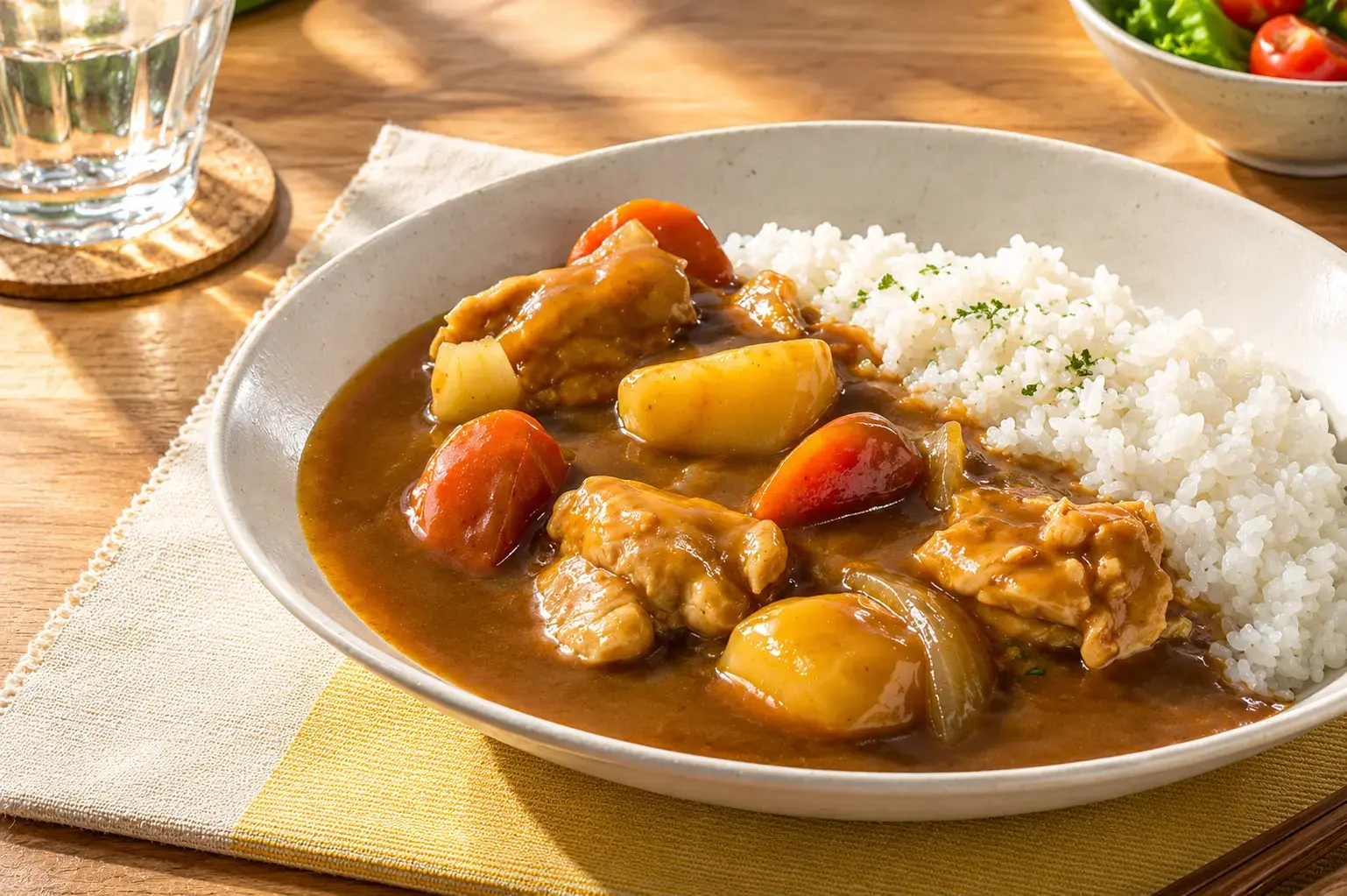
In Japan, japanese style curry rice, or karē raisu, is a national home cooking dish. Families make it from a box on weeknights, the way we might cook a simple soup. I find that comforting. It means you don’t need to be a skilled cook to make it well. You just need to be patient.
The Curry Roux Does Most of the Work
The heart of Japanese curry is the roux. A roux is a mix of fat, flour, and spices cooked together, then stirred into liquid to thicken it.
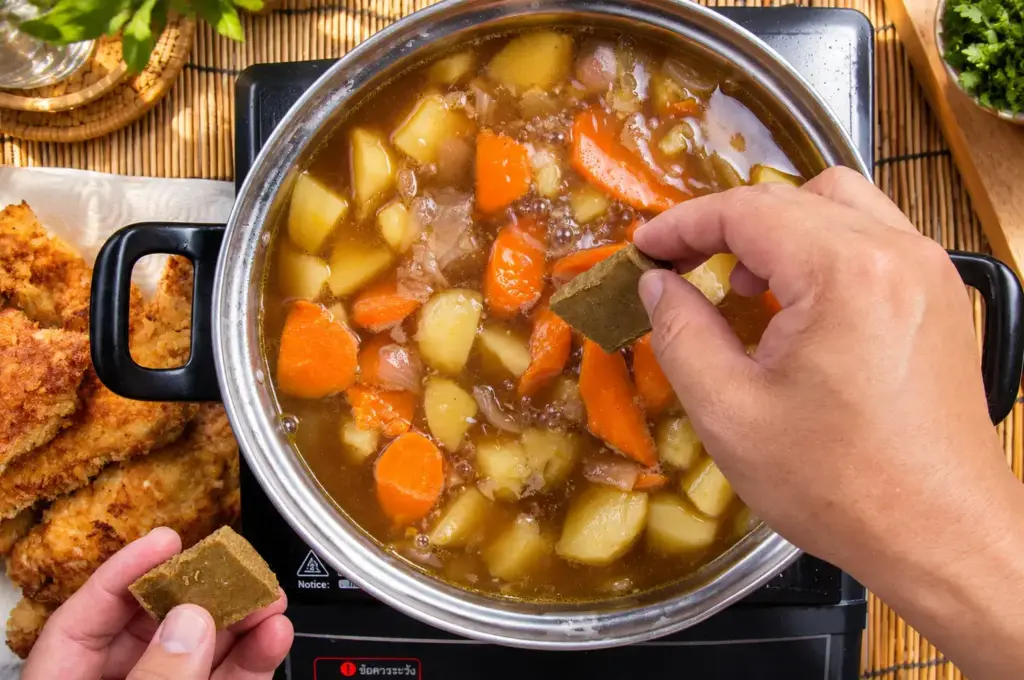
Most Japanese households use a boxed curry roux. It comes as a solid block, scored into squares like a chocolate bar. You break off the curry roux cubes and drop them into the pot, and they melt into a thick curry sauce.
Golden Curry, Vermont Curry, and Finding Your Box
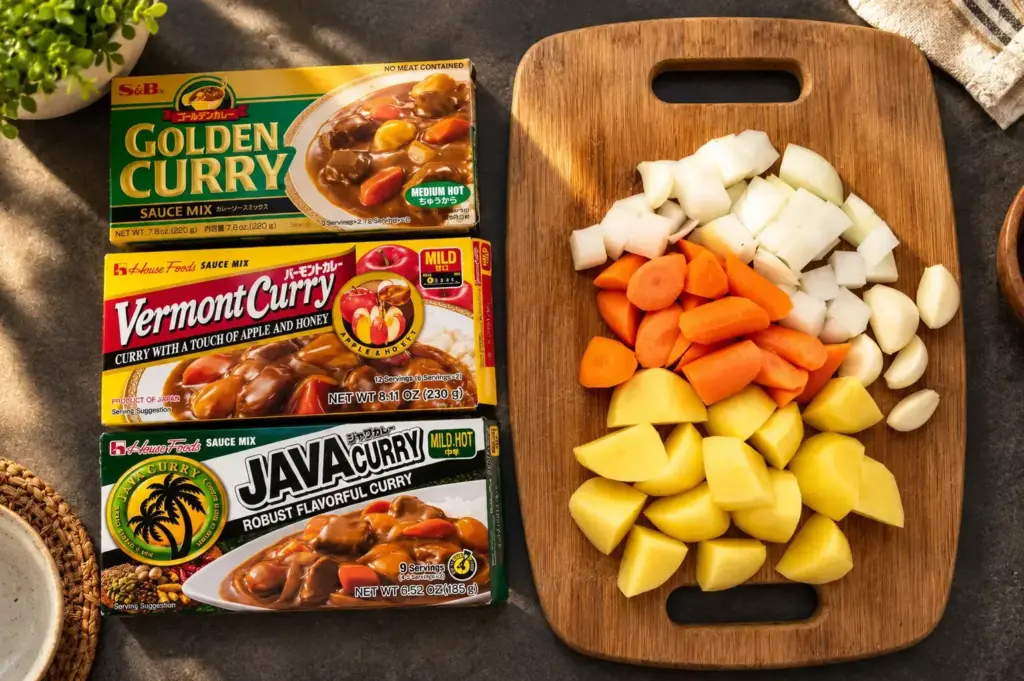
In Singapore, you’ll usually find a few brands at Cold Storage, NTUC FairPrice, and Japanese supermarkets like Don Don Donki.
S&B Golden Curry is the one I see most often on local shelves. It’s savory and a little darker, and it comes in different heat levels, from mildly spicy to medium spicy.
House Vermont Curry is sweeter. It contains apple and honey to soften the spice, which is why it’s often the first curry Japanese children eat.
Each box is labeled mild, medium hot, or hot. I’d suggest starting with medium hot. Japanese “hot” is still gentle by Singapore standards, so if you like heat, you can safely go one level up.
Insider knowledge: One standard box (about 115g) usually makes around six servings. Check the back of your box, because the water amount changes slightly between brands. In my experience, a full pot costs less than two curry sets at a mall food court.
These measurements follow House Foods' 115g curry roux recipe. Other brands, including S&B Golden Curry, may require different water quantities and ingredient proportions, so always check the cooking instructions on your package
How to Cook Japan Curry in Four Steps: My Japanese Chicken Curry Recipe
This is the simplest way to cook Japanese curry, based on the method printed on most boxes. I use chicken thighs because they stay tender and forgive you if you simmer a little too long. Breast meat dries out quickly.
The whole process takes about 45 minutes, most of it hands-off.
What You'll Need (6 servings)
1 box Japanese curry roux (about 115g)
250g chicken thighs, cut into bite-sized pieces
2 onions (about 400g)
1½ potatoes (about 230g)
½ carrot (about 100g), chopped carrots
1 tbsp vegetable oil
850ml chicken broth or water (750ml if you cook with the lid on)
Carrots and potatoes are the classic pairing. Keep the pieces roughly the same size so they cook evenly.
Step 1: Sauté
Heat the vegetable oil in a deep pot over medium heat. Add the sliced onions, chicken, carrots, and potatoes. Sauté until the onions soften, stirring occasionally. Don’t rush this part. Soft, sweet cooked onions give the sauce its rich flavour and body.
Step 2: Add Water and Simmer
Pour in the chicken broth or water and bring it to a boil. Skim off any foam that rises. Then lower the heat and simmer for about 15 minutes, until the carrots and potatoes are soft enough for a fork to slide through.
Step 3: Turn Off the Heat and Add the Roux
This is the step I got wrong on that rainy Sunday. Turn off the heat first. Then break the roux into pieces and stir them in until they dissolve.
Adding roux directly to boiling liquid can cause uneven dissolving and lumps. Turn off the heat first, break the roux into smaller pieces, and stir until fully dissolved before simmering again
Step 4: Simmer Until the Sauce Thickens
Put the pot back on low heat. Simmer for about 10 minutes and stir occasionally, scraping the bottom so nothing sticks. You’ll see the curry sauce slowly turn glossy and thick, becoming a delicious curry with a rich flavour.
Serve it over steamed rice. That’s Japanese curry rice, the same plate so many of us first met after school in a mall basement.
Pro tip: Use Japanese short grain rice if you can. It's slightly sticky and holds the sauce well. Sushi rice works too, and it's easy to find at Cold Storage or Japanese grocers. Long-grain jasmine rice will do in a pinch, but the curry slides off it.
Making Homemade Japanese Curry Roux
Once you’re comfortable with the box, you might want to try a homemade curry roux. It’s more work, but you control the salt, the spice, and what goes in.
The base is simple:
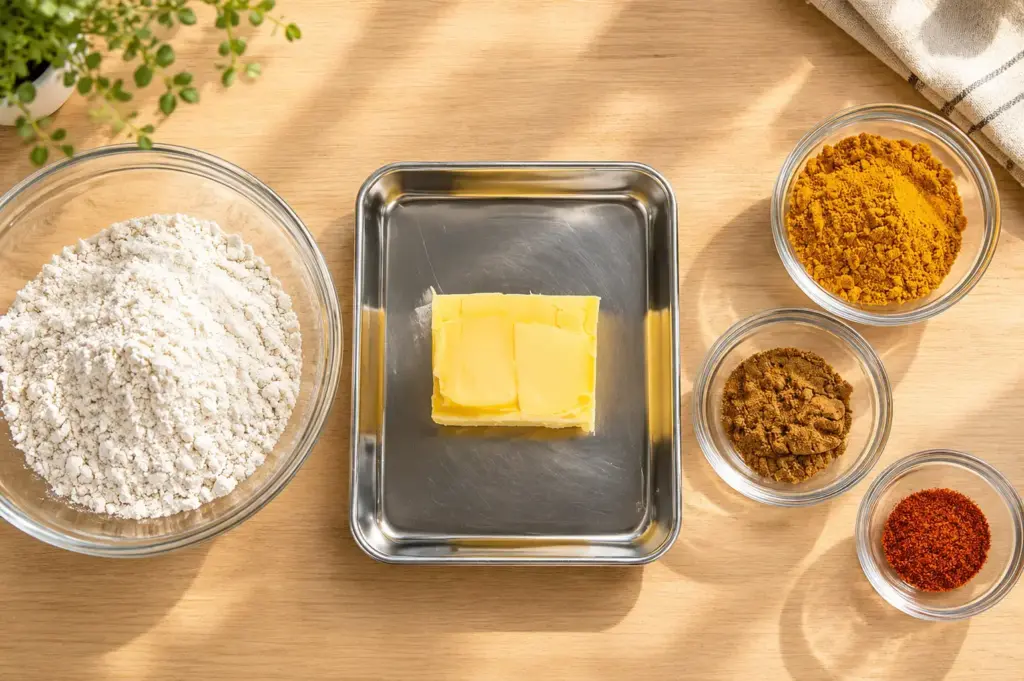
4 tbsp butter
4 tbsp all-purpose flour
2 to 4 tbsp Japanese curry powder (S&B is widely available here)
A pinch of garam masala, if you want extra warmth
Melt the butter in a saucepan over medium-low heat. Add the flour and stir continuously for approximately 20–25 minutes, until the mixture develops a golden-brown colour and nutty aroma. Add the curry powder and garam masala, stir for another 30 seconds, then remove from the heat.
For homemade curry, I also build up the pot itself. I sauté minced garlic and fresh ginger with the onions, use chicken broth instead of water, and add a grated apple, a spoon of brown sugar, and a tablespoon each of soy sauce and ketchup. Some people add a splash of Worcestershire sauce or even dark chocolate for depth.
Honestly, my first homemade roux burned. I turned away to answer a message, and it went from golden to bitter in under a minute. Stay with the pan. It asks for your full attention, but only for a few minutes.
Cooking Tips for a Singapore Kitchen
A few things I’ve learned from cooking curry in a small HDB kitchen, in our kind of weather:
Let it rest. Japanese curry tastes better the next day. I often cook on Sunday night for Monday dinner.
Cool it properly. Don’t leave curry on the stove overnight. Divide leftovers into smaller portions in shallow containers, cool them quickly, and refrigerate within two hours. Keep refrigerated curry at 4°C or below and consume it within three to four days, reheating thoroughly before serving.
Add water when reheating. The sauce thickens a lot in the fridge. A small splash of water brings it back.
Freeze without potatoes. Frozen curry turns the potatoes spongy and unappetizing. If you plan to freeze a batch, leave them out or fish them out first.
Want more heat? A pinch of cayenne pepper near the end works without changing the flavor much.
Using an Instant Pot
If you have an Instant Pot, you can shorten the simmering. Sauté the onions, chicken, chopped carrots, and potatoes on the sauté setting, add the water or chicken broth, and pressure cook briefly until the vegetables are tender. Release the pressure, switch the pot off, stir in the roux cubes, then use the sauté setting on low until the sauce thickens. Use the smaller amount of water, since nothing evaporates under pressure.
Beyond Curry Rice: Chicken Cutlet, Katsu Curry, and Soup Curry
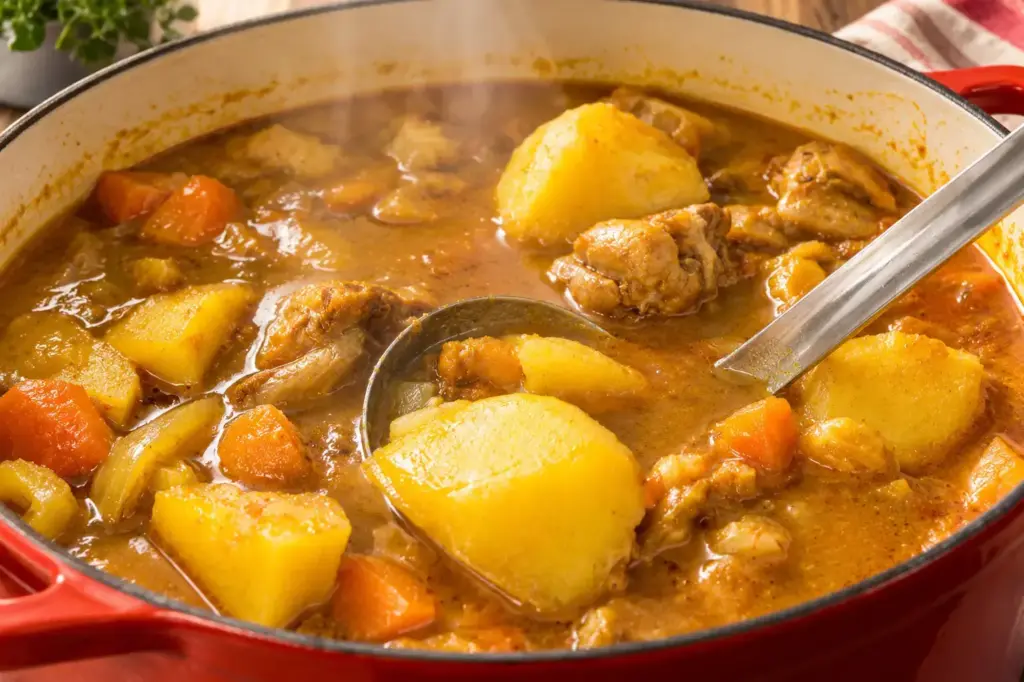
One pot of curry can turn into several meals.
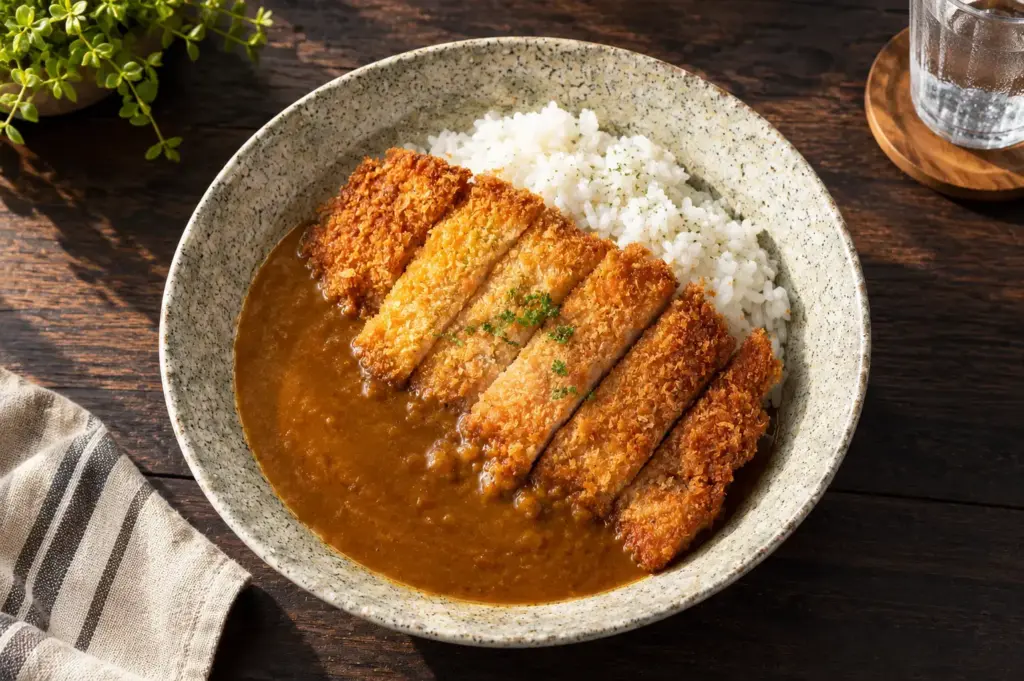
Katsu curry is the one most of us know best. Lay a sliced chicken cutlet or pork cutlet beside the rice, then pour the curry next to it, not over it. The panko stays crisp a little longer that way. If you’re making katsu curry, I’d keep the vegetables small so the cutlet stays the main thing on the plate.
Soup curry is a lighter, brothier Japanese version that originated in Hokkaido. It is a delicious recipe for those who want a quick and easy meal with a different texture and flavor profile.
Curry udon is what I make with leftovers on rainy nights. Thin the leftover curry with chicken broth, warm it through, and add cooked udon. It’s softer and soupier, the kind of bowl you eat slowly with the fan going.
Some people also stuff leftover curry into bread dough to make curry bread, or top it with shredded cheese and bake it. I haven’t mastered the bread yet. That’s a story for another day.
Learn more about what is Katsu Curry and it’s influence in Singapore through this article: What Is Katsu? A Complete Guide for Singapore Food Lovers
Mistakes I Made So You Don't Have To
Adding roux to boiling liquid. Lumps, every time. Heat off first.
Walking away during the final simmer. The sauce thickens fast and catches on the bottom. Stir occasionally, and keep the heat low.
Using too much water. Thin curry is disappointing. Follow the box, and remember that a lid means less evaporation.
Cutting vegetables unevenly. I’ve had mushy potatoes beside rock-hard chopped carrots. Cut them to similar sizes.
Using a full box when I wanted it mild. The flavor gets intense and salty. Half a box with less water works if you’re cooking for two.
FAQ: Your Japanese Chicken Curry Questions
Is Japanese curry spicy?
Not very. Even the “hot” boxes are gentle compared with most local curries. If you grew up on sambal, you’ll find it mildly spicy.
Where can I buy curry roux in Singapore?
Most Cold Storage and NTUC FairPrice outlets stock S&B Golden Curry and House brands in the Asian or Japanese aisle. Japanese supermarkets usually carry more varieties.
Is boxed curry roux gluten free?
Usually not, since it contains wheat flour. For a gluten-free version, make your own homemade curry roux with a gluten-free flour and check that your curry powder and Worcestershire sauce are gluten free too.
A Curry Recipe That Grows With You
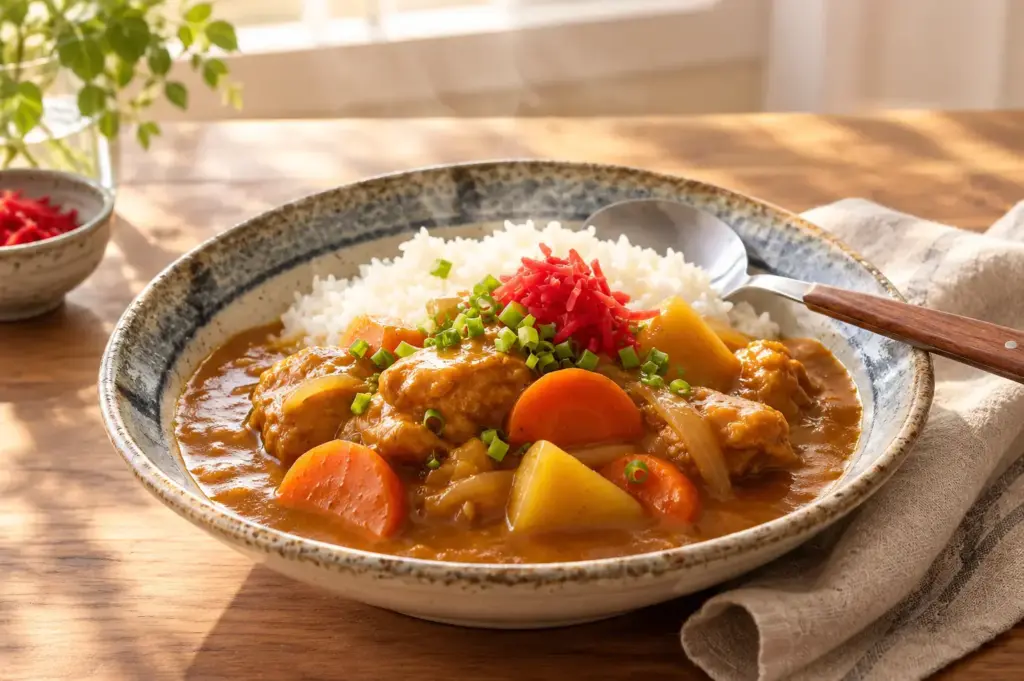
That first pot I made was lumpy and thin. My mother ate two plates anyway.
I think that’s the quiet gift of homemade curry. It doesn’t need to be perfect to be good. It forgives you, it gets better overnight, and it slowly becomes yours. A little more apple. A spoon of soy sauce. A box you start to prefer without knowing why.
So pick up a box on your next grocery run. Cook it on a slow evening, ideally when it’s raining. Let it sit until tomorrow. Then sit down with a plate of rice and notice how it tastes when you made it yourself.
Whether you stick to store Japanese curry or try homemade curry roux, this delicious recipe is one of the best japanese recipes for the japanese palate and a true ultimate comfort food for your taste buds.